When the call is urgent,
clarity comes first.
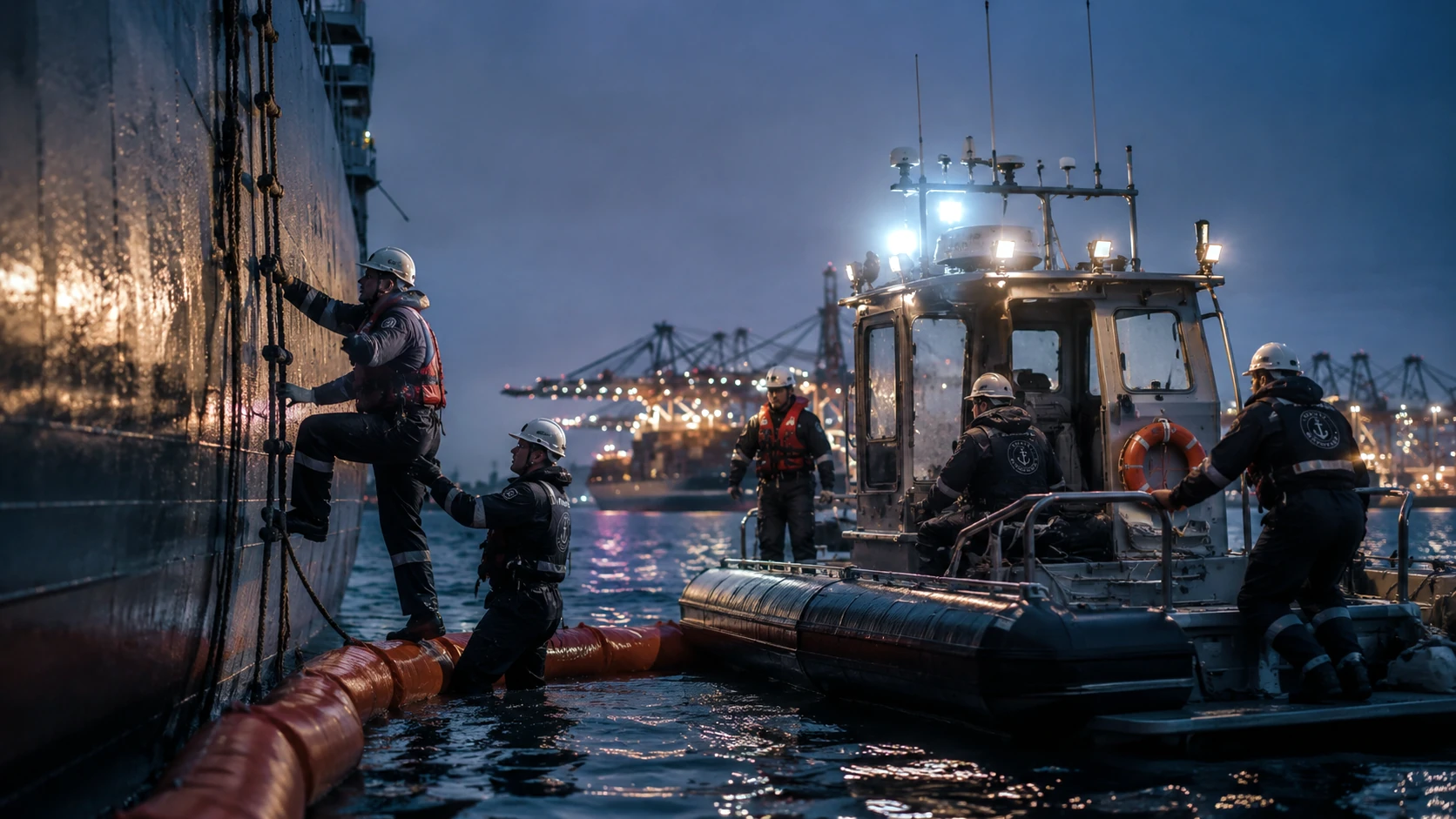
Use the emergency path for spill response, urgent pumping, waste removal, vessel incidents and time-critical marine support.
Give us the operational facts first.
For urgent incidents, the fastest useful information is the vessel, exact location, incident type, immediate hazard and best direct contact. The response path is built around that.
Spill
Containment and response coordination for marine environmental incidents.
Pumping
Urgent pumping or liquid-handling needs that cannot wait for routine scheduling.
Logistics
Critical parts, equipment or operational support required to keep the response moving.
Identify the immediate condition
What happened, where, and what is the immediate operational or environmental risk?
Confirm access and resources
Berth, vessel access, service window, required equipment and supporting constraints.
Coordinate the service path
Move the appropriate response scope forward with direct operating information.
Do not wait for a perfect brief.
Start with the facts you have. The emergency intake is intentionally shorter than a normal service request so the first conversation can focus on the condition, location and immediate need.
Open Emergency Intake →